Digital Solutions Specialist Singapore

Semantic Search for Websites: Why Keyword Search Is Costing You Customers
November 6, 2026
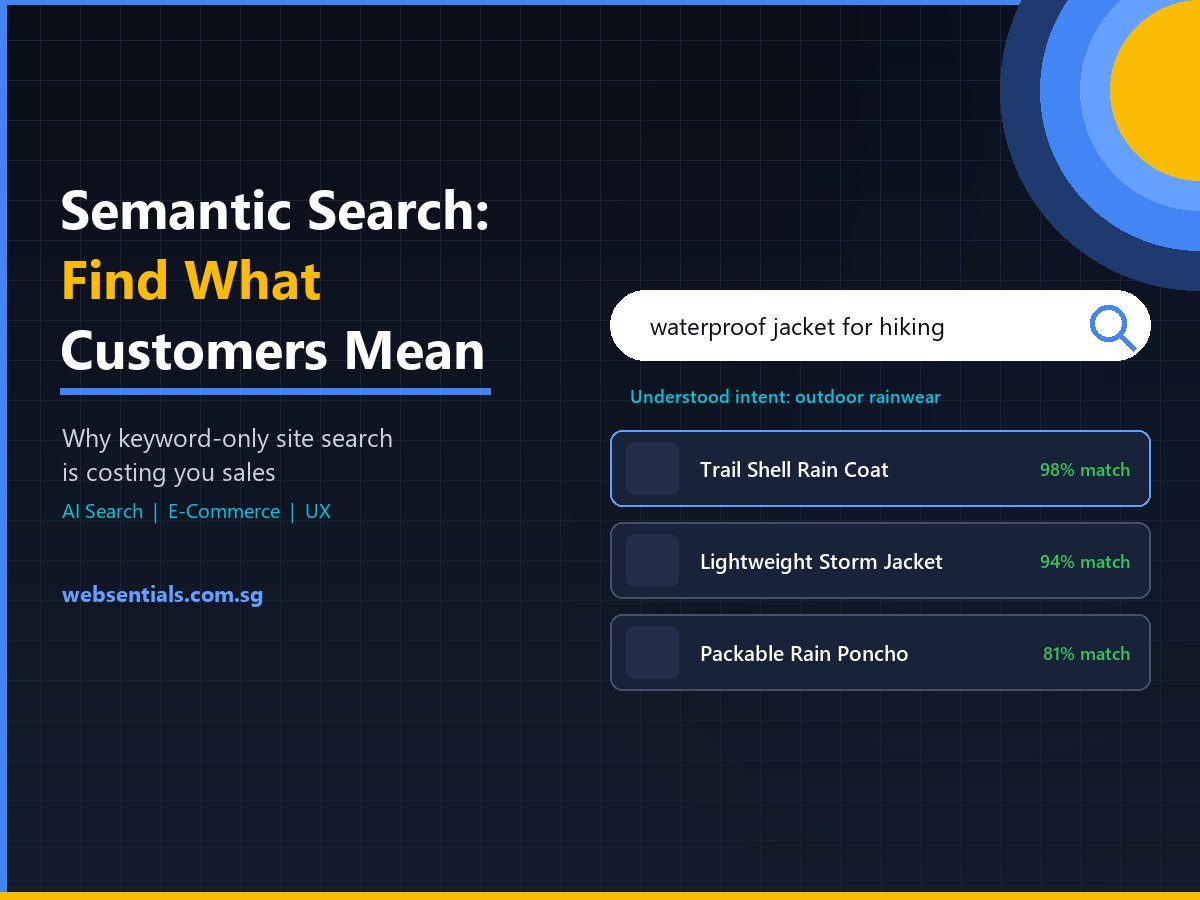
Semantic search understands what a visitor means, not just the exact words they type. Instead of returning “no results” for a misspelling or a different phrase, it finds the products, services and answers that match the visitor’s intent. For e-commerce stores and content-heavy websites, that difference directly affects sales and enquiries.
The Hidden Cost of Keyword-Only Site Search
Most website search boxes still rely on simple keyword matching. They look for pages containing the exact words typed. That works until real customers start searching the way people actually talk:
- A customer types “aircon not cold” but your service page says “air-conditioning servicing”.
- A shopper searches “waterproof jacket for hiking” and your product is titled “Trail Shell Rain Coat”.
- Someone makes a typo, like “skincare for snesitive skin”, and gets no results at all.
Visitors who use site search are usually showing clear intent: they know what they want. When search fails them, many simply leave, and you never see the lost sale in your reports.
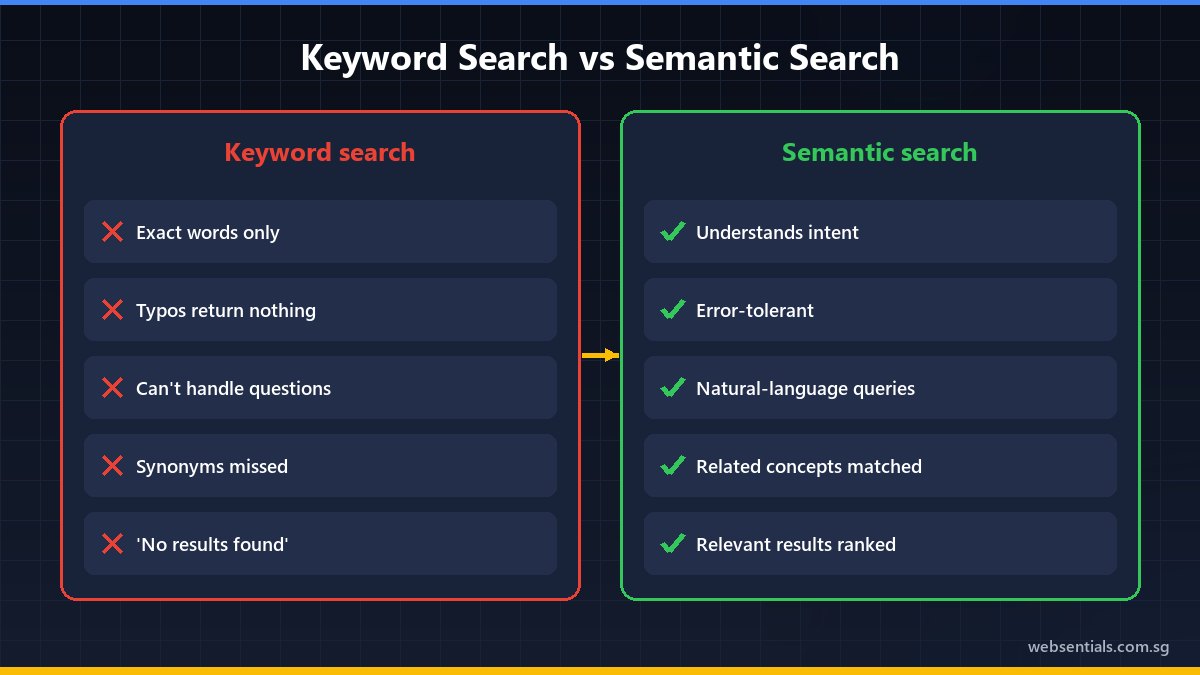
Keyword Search vs Semantic Search
| Capability | Keyword search | Semantic search |
|---|---|---|
| Matching | Exact words or close variants | Meaning and intent, including synonyms and related concepts |
| Typos | Often returns nothing | Tolerates misspellings |
| Natural-language queries | Struggles with full questions | Understands questions like “best gift for a new mum” |
| Ranking | By keyword frequency | By relevance to what the user means |
| Insights | Basic search logs | Patterns in what customers want but can’t find |
How Semantic Search Works (in Plain English)
Semantic search uses natural language processing (NLP) and machine learning to represent the meaning of words and phrases, so that “affordable”, “budget” and “cheap” are understood as related ideas. When a visitor searches, the system compares the meaning of the query with the meaning of your products, pages and articles, and returns the closest matches, even if they don’t share a single word.
It is the same broad shift that has changed web search itself: search engines and AI assistants increasingly interpret intent rather than matching strings. We covered how this affects your visibility in SEO vs AI Search Optimization (AEO).
Where Semantic Search Makes the Biggest Difference
1. E-Commerce Stores with Large Catalogues
The more products you sell, the more likely customers are to describe them differently from your product titles. Semantic search, combined with smart filters and auto-suggestions, helps shoppers reach the right product in fewer steps. It works best on a well-structured e-commerce website with clean product data.
2. Service Businesses with Many Pages
Clinics, professional services firms and B2B suppliers often have dozens of service pages. Semantic search helps visitors who describe their problem (“back pain after running”) find the right service (“sports physiotherapy”).
3. Knowledge Bases and Resource Centres
For FAQs, documentation and blogs, semantic search surfaces the answer rather than a list of loosely related pages, reducing support enquiries.
Getting Started with Semantic Search
- Review your search logs: look for searches with zero results or high exit rates. They reveal what customers want but can’t find.
- Clean up your content and product data: clear titles, descriptions and categories improve any search system.
- Add semantic search to your site: the Websentials Semantic Search Bar adds AI-powered intent recognition, smart auto-suggestions, error-tolerant search and advanced filtering, and integrates with existing platforms.
- Measure and refine: track search usage, conversions after search and remaining zero-result queries.
Frequently Asked Questions
Is semantic search only for large e-commerce sites?
No. Any website where visitors search for products, services or answers can benefit. Smaller sites with clear intent-driven searches, such as clinics, training providers and B2B suppliers, often see quick improvements.
Does semantic site search help my Google rankings?
Not directly; it improves the experience of visitors already on your site. Indirectly, helping visitors find what they need can improve engagement and conversions, and the content clean-up involved often benefits SEO too.
Will semantic search work with my existing website?
In most cases, yes. Semantic search can be integrated with common website and e-commerce platforms. We’ll review your platform and content structure first to recommend the best approach.
Help Customers Find What They Want with Websentials
Every failed search is a customer who wanted to buy but couldn’t find their way. At Websentials, we combine AI solutions with solid web development to make your website easier to search and easier to buy from.
Contact the Websentials team today for a demonstration of the Semantic Search Bar.
References
- Google Cloud: What is semantic search?
- Websentials: Semantic Search Bar