Digital Solutions Specialist Singapore

Logistics Website Design in Singapore: Features That Win B2B Clients
October 14, 2026
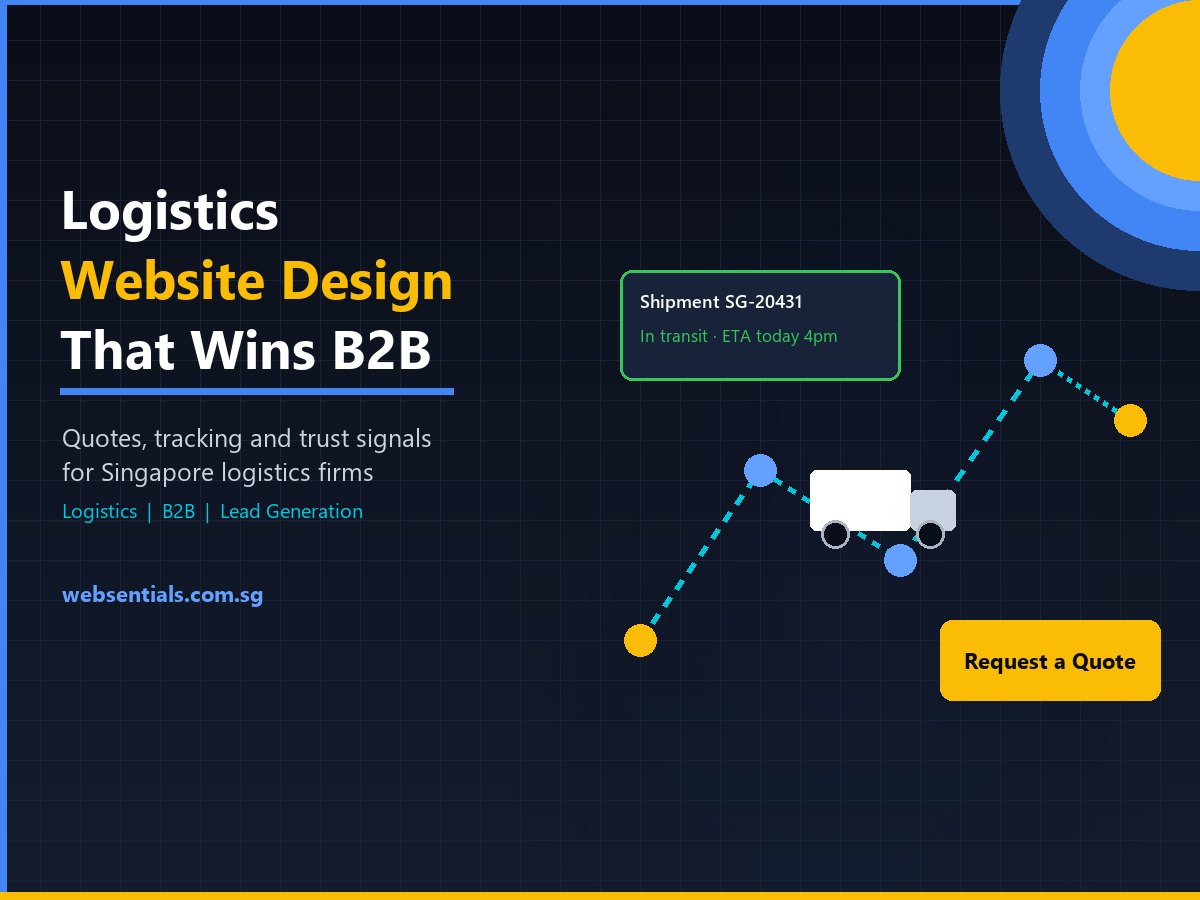
A logistics website has to do more than look professional: it needs to answer a B2B buyer’s questions about capabilities, coverage, reliability and pricing quickly, and make it easy to request a quote or track a shipment. This guide covers the features that turn a Singapore logistics company’s website from a static brochure into a lead-generating sales tool.
Why Logistics Buyers Judge You by Your Website
Procurement managers, e-commerce sellers and manufacturers shortlist logistics partners online before they ever pick up the phone. They want to know, within seconds, whether you handle their type of cargo, cover their routes, meet their compliance needs and respond quickly. If your website doesn’t answer those questions, the buyer moves on to a competitor whose site does.
Logistics is also a high-enquiry business. Customers ask the same questions repeatedly: Where is my shipment? How much to ship this pallet? Do you do same-day delivery? A well-built website handles much of that load automatically, freeing your operations team to focus on moving freight.
Essential Features of a Logistics Company Website
| Feature | What it does | Business impact |
|---|---|---|
| Clear service pages | Separate pages for freight forwarding, warehousing, last-mile, cold chain, etc. | Buyers find their need fast; each page can rank for its own search terms |
| Request-a-quote form | Structured fields for origin, destination, cargo type, weight and dimensions | Better-qualified leads and faster, more accurate quotations |
| Shipment tracking | Tracking lookup or integration with your transport management system | Fewer “where is my parcel?” calls and emails |
| Capabilities and coverage | Fleet, warehouse space, routes and service areas | Shows you can handle the buyer’s volume and destinations |
| Trust signals | Certifications, industry memberships, client logos and case studies | Reduces perceived risk for B2B buyers |
| 24/7 enquiry handling | AI chatbot answering common questions out of hours | Captures overseas and after-hours enquiries |
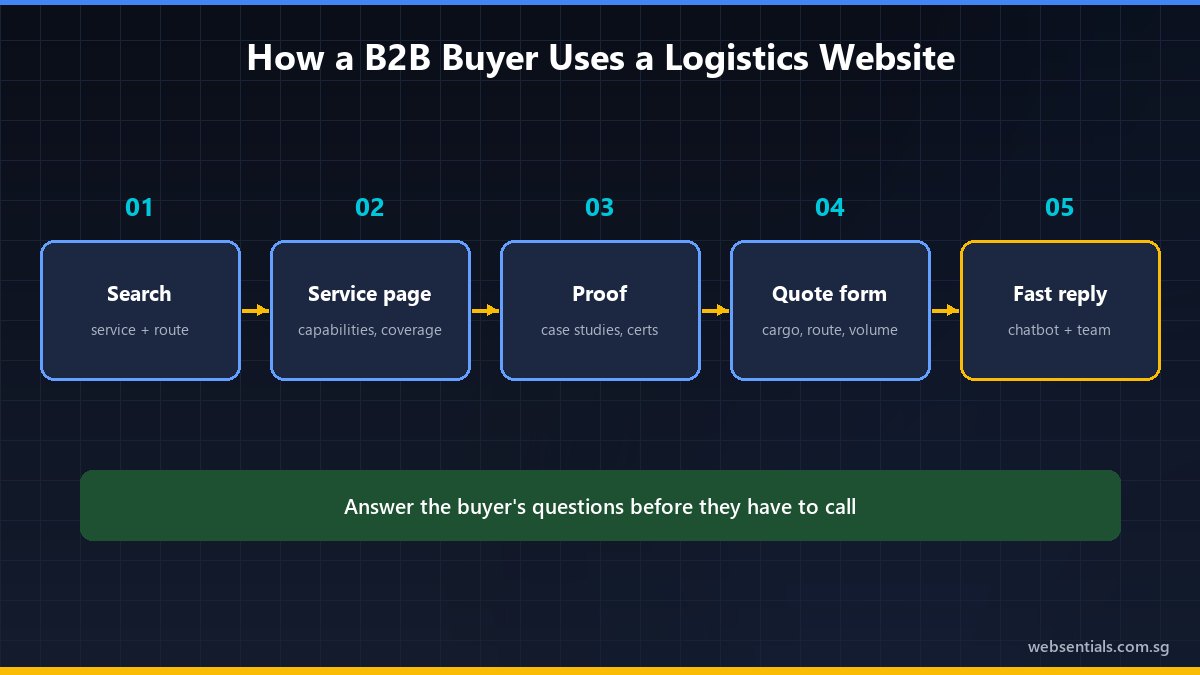
How to Design a Logistics Website That Wins B2B Clients
1. Organise Around What Buyers Are Looking For
Structure your navigation by service and industry rather than by internal departments. A buyer looking for cold-chain warehousing for pharmaceuticals should land on a page that speaks directly to that, with the relevant temperature ranges, compliance standards and capacity.
2. Make Quote Requests Effortless
The quote form is your most important conversion point. Ask for the details your team needs to price the job accurately, but keep the form short and mobile-friendly, and confirm receipt immediately with an expected response time. Dedicated, conversion-focused landing pages for your main services can lift enquiry rates further.
3. Automate Repetitive Enquiries
Many logistics enquiries are routine: tracking updates, service details and pricing guidance. NEK Logistics integrated Websentials Omnibot into its website to answer these queries instantly and around the clock, reducing manual support and improving response times. Eligible SMEs may be able to adopt pre-approved solutions like Omnibot with EDGE Grant support.
4. Prove Reliability with Evidence
B2B buyers are cautious because a failed delivery reflects on them. Show certifications, safety and quality standards you hold, real case studies with measurable results, and named client logos where permitted. Specific claims backed by evidence are far more persuasive than generic promises of “fast and reliable service”.
5. Build for Search and Speed
Many logistics searches are specific, such as “cold chain logistics Singapore” or “freight forwarder to Indonesia”. Dedicated service and route pages help you rank for these terms, while fast local hosting keeps pages quick for regional visitors. Combine this with SEO to reach buyers at the moment they’re searching.
Frequently Asked Questions
Can my website integrate with our transport management system?
Often, yes. If your TMS or warehouse system offers an API, tracking data and booking requests can be connected to your website. The right approach depends on your system, so we start by reviewing what integrations it supports.
Should a logistics company have a website chatbot?
If you receive many repetitive questions about tracking, rates or services, an AI chatbot can answer them instantly at any hour and pass complex enquiries to your team. It is especially useful when customers contact you from different time zones.
How many service pages should a logistics website have?
As a rule, create one page for each distinct service or industry you want to win business in. Separate pages let you speak directly to each buyer’s needs and give search engines a clear page to rank for each service.
Build a Logistics Website That Works as Hard as Your Fleet
Your website should qualify leads, answer routine questions and prove your reliability before a buyer ever calls. At Websentials, we design and build logistics websites, add AI automation and drive qualified traffic through search marketing. See more of our logistics industry solutions.
- Review your current website: we’ll identify where buyers drop off and what’s missing.
- Plan the right features: quote forms, tracking, chatbot and service pages.
- Launch and grow: combine a fast website with SEO and SEM to reach more buyers.
Contact the Websentials team today to discuss your logistics website.
References
- Websentials case study: NEK Logistics – AI-powered customer support with Omnibot
- Google Search Central: Creating helpful, reliable, people-first content